
Advanced environmental solutions
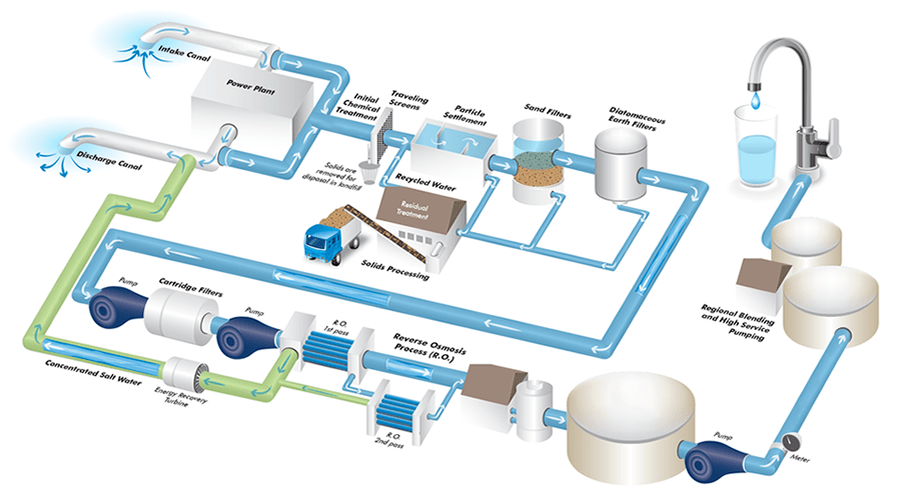
Seawater desalination
The sea water passes through a sea water refinery, in which the total solids, toxic waste, pharmaceuticals and toxic or radioactive substances are extracted and the salt is removed in a second step. The salt and the microparticles are collected for further processing. The solids are discharged to the waste recovery system.

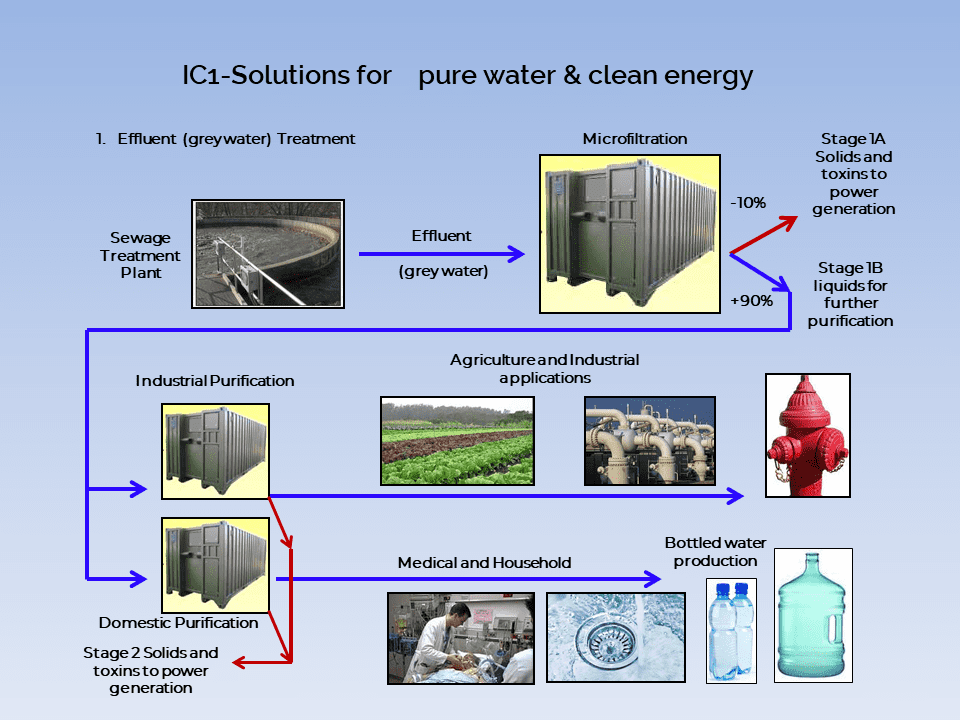
Water treatment
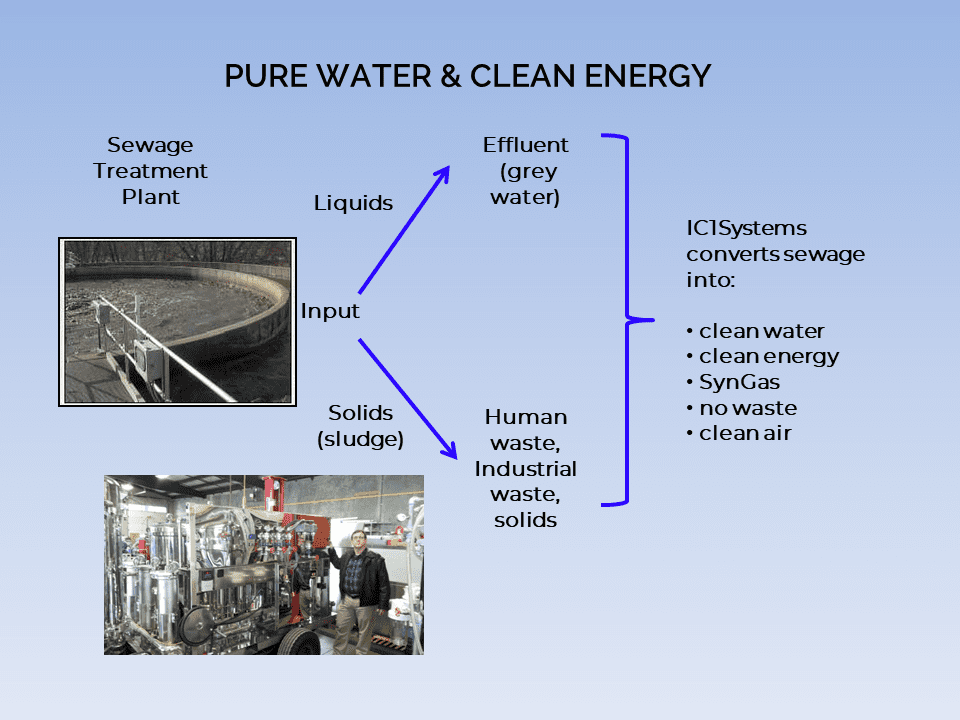
Development and fully integrated system design for water treatment and water production technologies in combination with other waste processing technologies. The IC1 systems can also be integrated into existing systems. IC1 offers modular, stationary and mobile systems. With the mobile solution, for example, contaminated water can be cleaned on site.

Petroleum and CO2-free fuels
In a further process of the waste recycling system, a non-petroleum-containing CO2-free fuel is produced in a molecular reconstruction refinery. This can be used to operate engines in vehicles, aircraft, ships or, for example, construction machinery. With technical retrofitting, most of the engines can also be converted to our CO2-free fuel.

Gaseous fuels
In the molecular reconstruction refinery, gaseous fuels can also be produced, which can be used, for example, to drive large turbines for CO2-free and low-emission electricity production.
Schematic representation of IC1-technology